SAGE7 has one employee. It also has an org chart
In the last twelve months that org shipped: four papers, 𝟮𝟱 open-source libraries, 𝟭𝟯 upstream fixes to vLLM, litellm and mem0, a production platform on its own Kubernetes…
In the last twelve months that org shipped: four papers, 𝟮𝟱 open-source libraries, 𝟭𝟯 upstream fixes to vLLM, litellm and mem0, a production platform on its own Kubernetes cluster, and agent deployments inside customers' finance and energy teams.
Nobody else works here. Here is how it runs.
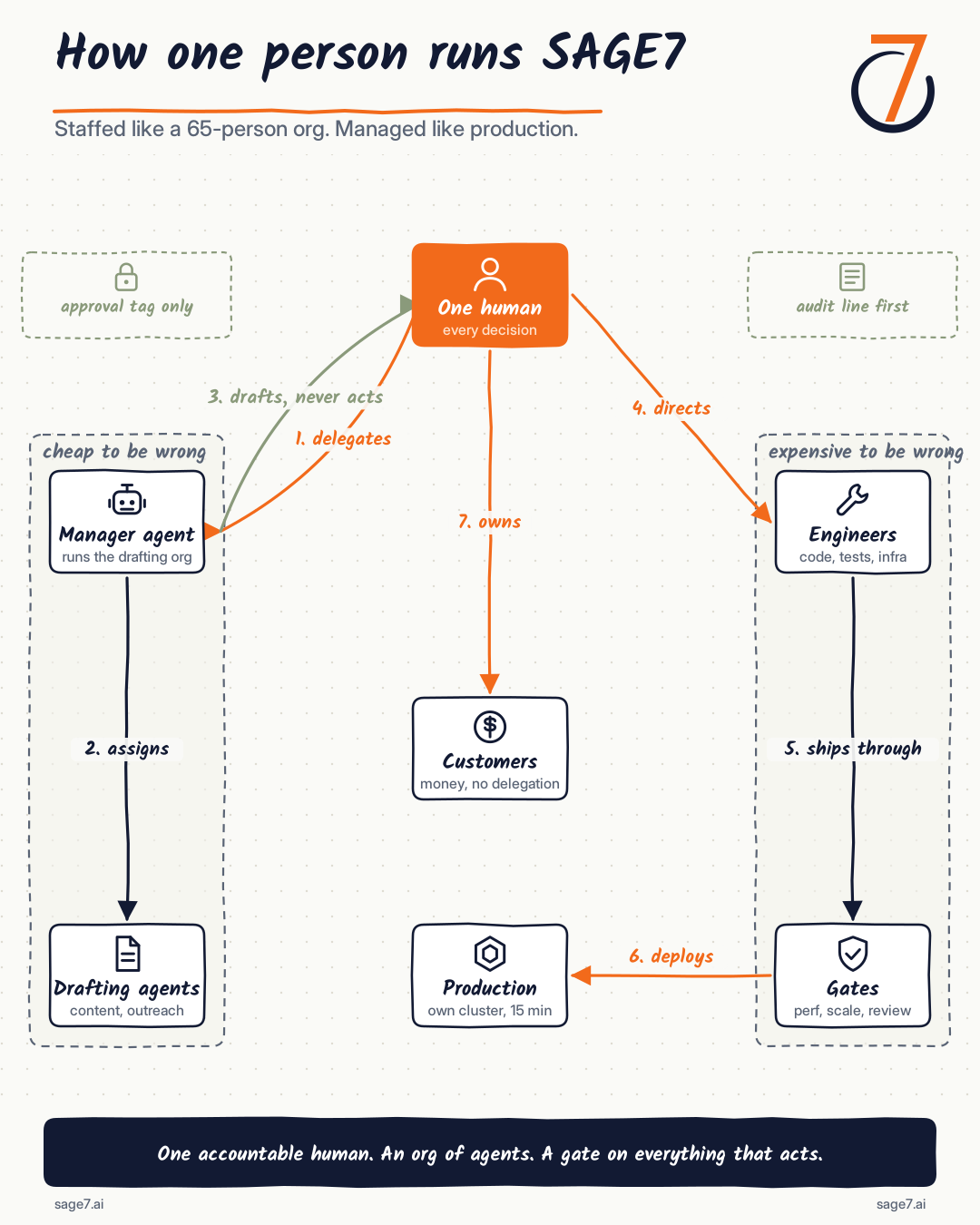
𝗔𝗻 𝗼𝗿𝗴 𝗰𝗵𝗮𝗿𝘁, 𝗻𝗼𝘁 𝗮 𝗰𝗵𝗮𝘁𝗯𝗼𝘁. Every agent has a charter, a scope, and the statuses it may move work into. A manager agent runs the drafting functions: content, research, outreach. I run the engineering agents directly. Three things are never delegated: customers, production, money.
𝗖𝗵𝗲𝗮𝗽 𝘁𝗼 𝗯𝗲 𝘄𝗿𝗼𝗻𝗴, 𝗲𝘅𝗽𝗲𝗻𝘀𝗶𝘃𝗲 𝘁𝗼 𝗯𝗲 𝘄𝗿𝗼𝗻𝗴. The drafting side has no credentials. It cannot post, send or submit; a draft can only wait for one human word. The engineering side ships through the same gates I would: performance, scale, architecture. No pass, no merge, however good the pull request reads.
𝗥𝗲𝗽𝗼 𝘁𝗼 𝗽𝗿𝗼𝗱𝘂𝗰𝘁𝗶𝗼𝗻 𝗶𝗻 𝘂𝗻𝗱𝗲𝗿 𝟭𝟱 𝗺𝗶𝗻𝘂𝘁𝗲𝘀. One standing platform: own cluster, GitOps, CI-pinned images, a namespace and a database per product. Sized for ~𝟭𝟬𝟬𝗸 customer interactions a day. Agents ship through it and nowhere else, which is what makes the gates real.
I ran a 65-person data and ML org before this. The lesson that transferred was not any individual's output. It was that scale comes from charters, scopes and gates, so the one accountable human only looks at the decisions that are expensive to get wrong.
That is also the product. SAGE7 builds the trust boundary that lets one accountable person run a fleet of agents, and lets a bank or an insurer do the same at their scale.
What is the one decision in your company that should never leave a human's hands?
Further reading
Full write-up, with the org chart: https://sage7.ai/blog/one-person-company