My smoke alarm goes off every time I make toast. So I did what everyone does: I took the battery out
That is a threshold problem, and the same one sits inside every fraud, risk and identity model. Who picked the cutoff yours ships with? Often the honest answer is nobody. It is…
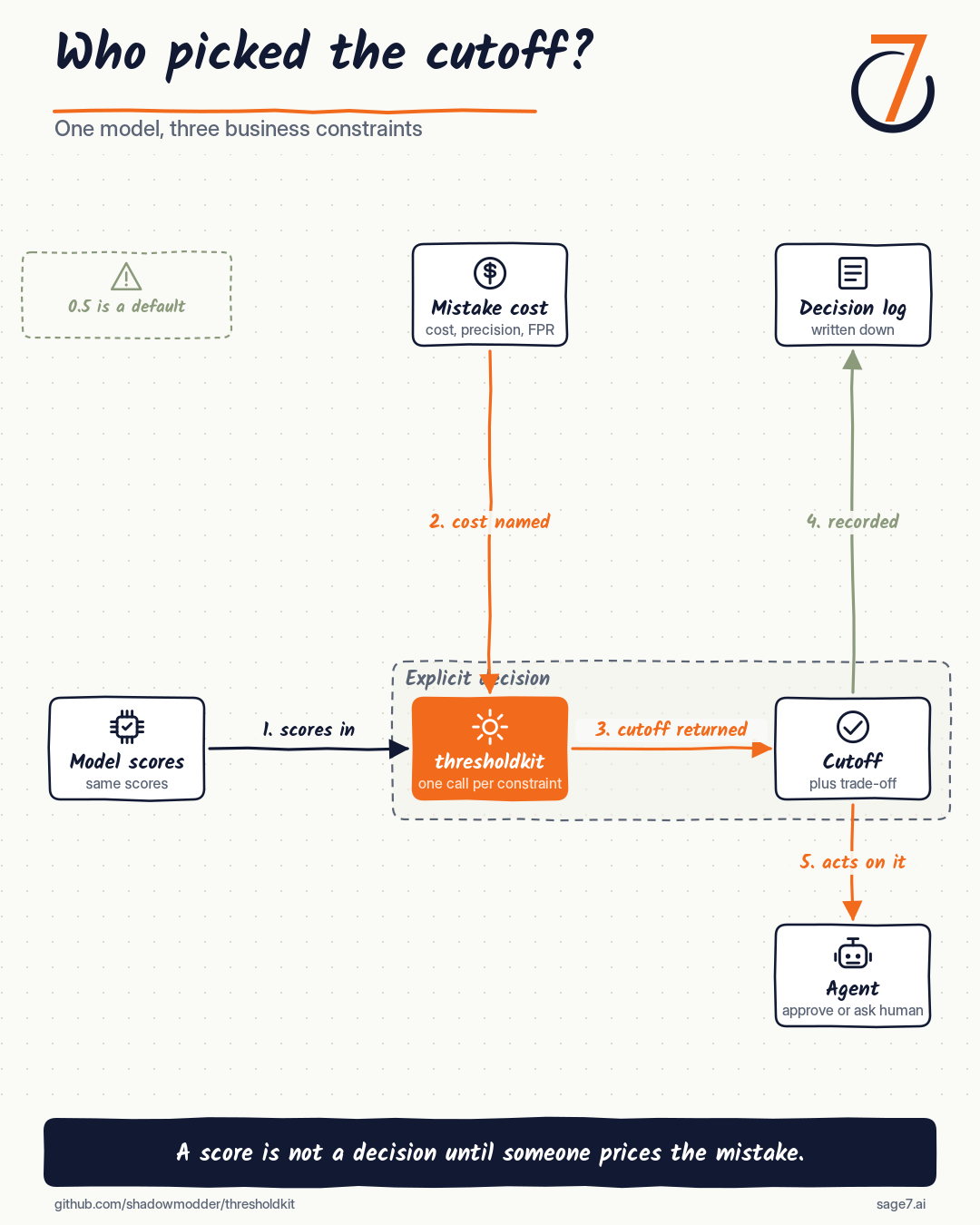
That is a threshold problem, and the same one sits inside every fraud, risk and identity model. Who picked the cutoff yours ships with? Often the honest answer is nobody. It is 𝟬.𝟱, because that is the default.
The model didn't fail there. The decision did. 𝗔 𝘀𝗰𝗼𝗿𝗲 𝗶𝘀 𝗻𝗼𝘁 𝗮 𝗱𝗲𝗰𝗶𝘀𝗶𝗼𝗻 until someone says what a mistake costs.
So which mistake is more expensive for you?
If a missed fraud costs 𝟭𝟬× a false alarm, pick the cutoff that minimises expected cost. Accuracy is the wrong target.
If every flag lands in front of a human reviewer, hold precision at 𝟬.𝟵𝟱 and take the recall that's left.
If blocking a good customer is what you can't afford, cap the false-positive rate at 𝟭% and work backwards.
Same model, same scores, and you can land on three different cutoffs. Each is right for a different business.
I wrote this up as a small open-source library, thresholdkit: 𝟭𝟭𝟭 𝗹𝗶𝗻𝗲𝘀 of Python, one dependency, one function per constraint. Each call returns the cutoff and the trade-off you just accepted, so the choice is written down instead of inherited.
It matters more now that agents act on scores. "Approve, or ask a human?" is a threshold too.
What does a false alarm cost in your system, and does anyone own that number?
https://github.com/shadowmodder/thresholdkit