If you hired an assistant to run your inbox, you'd still read what they were about to send
We skip that step with software agents. I did too. My first version ran for 𝟲 𝘄𝗲𝗲𝗸𝘀. The drafting agent wrote 𝟯𝟰 𝗳𝗶𝗹𝗲𝘀 nobody read, and 13 runs in a row logged \"draft unsent.\"…
We skip that step with software agents. I did too. My first version ran for 𝟲 𝘄𝗲𝗲𝗸𝘀. The drafting agent wrote 𝟯𝟰 𝗳𝗶𝗹𝗲𝘀 nobody read, and 13 runs in a row logged "draft unsent." Nothing broke loudly. It just never mattered.
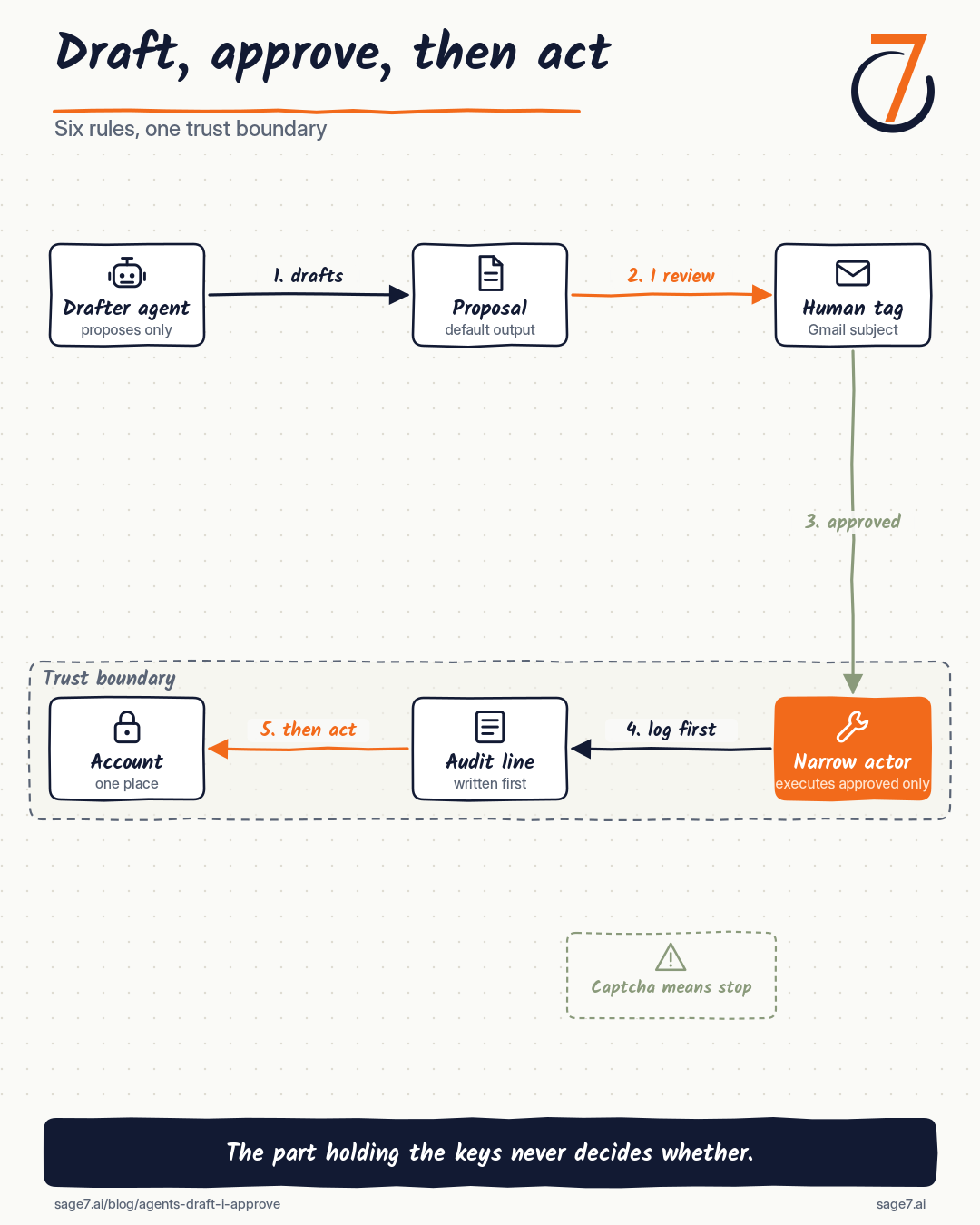
So I rebuilt it. Six rules I now hold every agent to before it gets near my accounts:
- Draft, don't act. The default output is a proposal.
- One human signal, in a place I already look. For me, a Gmail subject tag.
- The actor is narrow: one thing to do, one place to do it.
- The actor is dumb on purpose. It never decides whether; it only executes what's approved.
- Stop at any security check. A captcha is a message to me, not an obstacle.
- Write the audit line before you do the thing.
Rule 4 gets the most pushback. "Why not let it judge quality?"
Because the moment the actor can decide, you've moved the 𝘁𝗿𝘂𝘀𝘁 𝗯𝗼𝘂𝗻𝗱𝗮𝗿𝘆 to the wrong side of the wire.
The drafting agent can be as clever as you like. The part holding the keys should not be.
I wrote these up with the numbers from my own failed first attempt. Link in the first comment.
Further reading
The full essay, with the numbers from my failed first attempt: https://sage7.ai/blog/agents-draft-i-approve